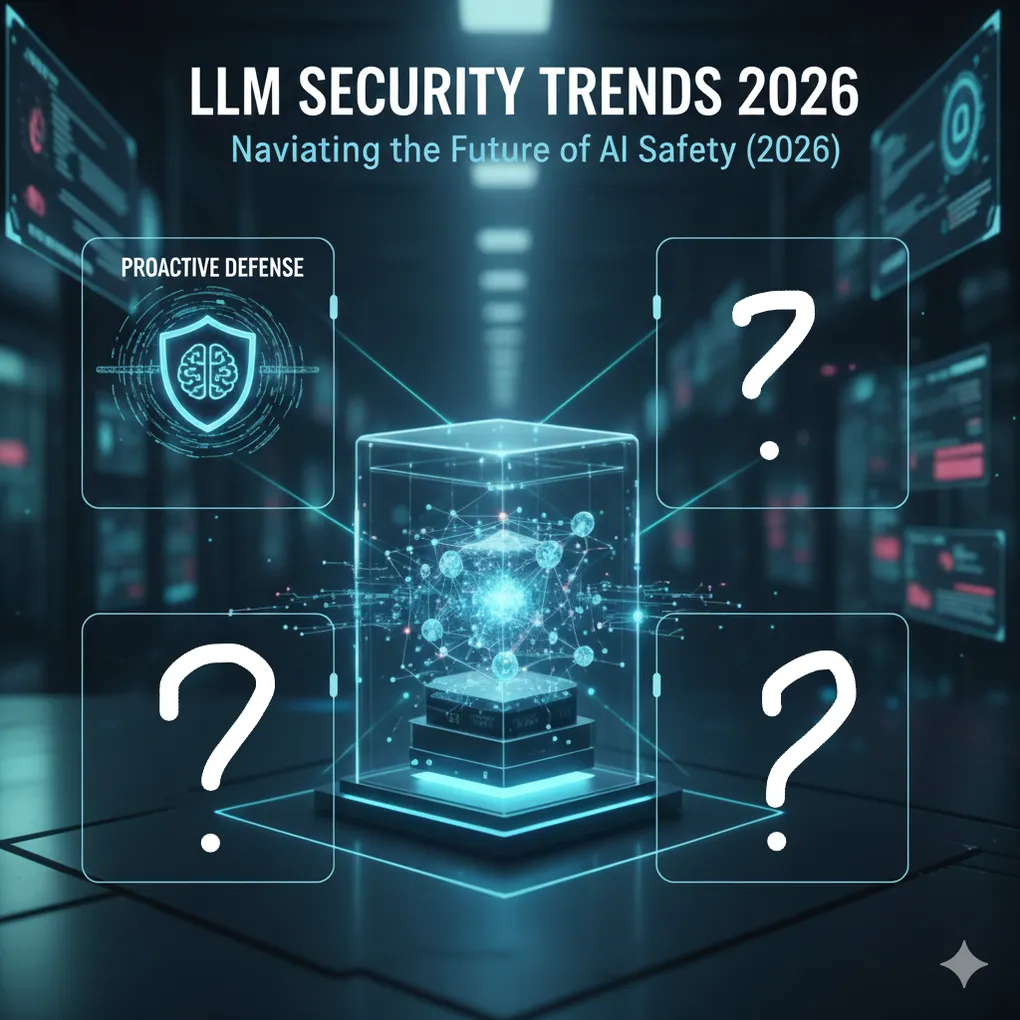
LLM Security Trends to Watch in 2026
LLM Security Trends to Watch in 2026
2026-01-03 - Oxprompt Team
A concise guide for engineers, security teams, and product owners.
Large language models are now central to many products. As adoption grows, so do the attack surface and the defensive practices needed to manage risk. Below are practical trends and recommendations that will shape secure deployments in 2026.
1. Standardized Red‑Teaming Playbooks
Teams are moving from ad‑hoc probing to repeatable, auditable red‑teaming processes. Create small, focused playbooks (threat, steps, expected failure modes) and automate regression tests so gaps stay visible over time.
2. Prompt Provenance & Context Integrity
Maintaining a signed provenance trail for system, developer, and user prompts reduces injection risk and eases audits. Include metadata (source, timestamp, fingerprint) when passing context between services.
3. Principle of Least Privilege for Tools
Treat model capabilities and connected tools (search, execution, file access) as scarce privileges. Apply role‑based access and just‑in‑time elevation for sensitive operations.
4. Better Detection of Prompt Injection
Combine model‑level guardrails with runtime detectors that inspect incoming prompts for anomalous structure, layered instructions, or credential exfiltration attempts.
5. Synthetic Content Attribution
Adopt provenance and watermarking standards where appropriate so downstream consumers can assess whether content is model‑generated, and with which model/version.
6. Multi‑Model Orchestration Risks
Orchestrating several models together improves capability but multiplies trust boundaries. Treat each model as a separate security domain and validate cross‑model dataflows.
7. Privacy‑Preserving Fine‑Tuning
Differential privacy, federated updates, and careful data curation are now required for customer data finetuning. Keep audit logs of datasets and transformations.
8. Supply‑Chain & Training Data Provenance
Know where training and fine‑tuning data come from. Track licenses, PII masking steps, and retention policies to reduce legal and privacy risk.
9. Real‑Time Observability & Response
Instrument models with telemetry (queries, confidence, hallucination indicators) and integrate with SOC workflows for alerting and human review.
10. Regulation, Compliance, and Contracts
Expect evolving regulations. Bake compliance checks into model selection, data handling, and external API contracts.
Practical checklist
- Maintain red‑team playbooks and automated regression tests
- Add prompt provenance headers to every request
- Limit tool capabilities and require approvals for sensitive use
- Log and monitor model outputs for anomalous behavior
- Use privacy‑preserving techniques for finetuning